Understanding AC Joint Injuries
The AC joint‚ connecting your collarbone and shoulder blade‚ is often injured—not within the shoulder joint itself‚ but at this specific articulation.
Understanding its anatomy and common injury mechanisms is crucial for effective rehabilitation‚ often involving a progressive exercise program.
What is the AC Joint?
The Acromioclavicular (AC) joint is a crucial‚ yet often misunderstood‚ component of shoulder function. It’s where the acromion – the bony tip of your shoulder blade – meets the clavicle‚ or collarbone. Unlike the shoulder joint itself‚ the AC joint isn’t a weight-bearing joint‚ but it plays a vital role in arm movements and overall shoulder mechanics.
Often referred to as a “separated shoulder‚” an AC joint injury doesn’t actually involve the shoulder joint. This joint provides stability and allows for a full range of motion. Injuries commonly occur due to direct impact‚ like a fall onto the shoulder‚ or a collision during sports. Understanding its structure and function is the first step towards effective rehabilitation‚ which frequently incorporates targeted exercises.
Causes of AC Joint Injuries
AC joint injuries typically result from direct trauma to the shoulder. Common causes include falls directly onto the shoulder‚ particularly during sports activities like cycling‚ skiing‚ or contact sports. Collisions‚ such as those experienced in football or hockey‚ are also frequent culprits.
The force from these impacts can cause a sprain‚ strain‚ or even a complete separation of the ligaments supporting the AC joint. Weightlifters can also be susceptible to AC joint issues due to repetitive stress and heavy loads. While less common‚ degenerative changes associated with arthritis can also contribute to AC joint pain and dysfunction‚ potentially requiring a specific rehabilitation program.
Symptoms of an AC Joint Injury
Symptoms of an AC joint injury vary depending on the severity of the damage. Mild sprains may present as localized tenderness directly over the AC joint‚ with minimal pain and swelling. More significant injuries‚ like separations‚ often involve noticeable deformity‚ a prominent bump on the top of the shoulder‚ and considerable pain.
Individuals may experience difficulty lifting the arm‚ especially across the body. Pain is typically exacerbated by overhead activities or reaching. Bruising around the joint is common. A popping or snapping sensation at the time of injury may be recalled. Accurate diagnosis is crucial to guide appropriate rehabilitation‚ including a tailored exercise program.

Initial Management & Recovery Phases
Early management focuses on pain and inflammation control‚ followed by a phased rehabilitation program to restore range of motion and strength.
Phase 1: Acute Phase (0-6 Weeks)
The initial 0-6 week period prioritizes protecting the AC joint and minimizing pain. This phase emphasizes gentle movements to prevent stiffness without compromising the healing process. Early exercises are crucial‚ but must be carefully controlled.
Focus is on pain management and initiating a rehabilitation protocol. Goals include reducing swelling‚ controlling discomfort‚ and beginning a gentle range of motion program. Immobilization with a sling or brace is common‚ providing support and limiting stress on the joint.
Progression is dictated by pain levels and tissue healing; avoid activities that exacerbate symptoms. A key objective is to prepare the joint for subsequent strengthening phases.
Pain Management Strategies
Effective pain control is paramount during the initial stages of AC joint injury recovery. Strategies often begin with RICE – Rest‚ Ice‚ Compression‚ and Elevation – to reduce inflammation and discomfort. Over-the-counter pain relievers‚ such as ibuprofen or naproxen‚ can help manage pain and swelling.
Prescription pain medication may be considered for more severe pain‚ but should be used judiciously and under a physician’s guidance. Gentle range of motion exercises‚ initiated as pain allows‚ can also help alleviate stiffness and promote healing.
Maintaining a comfortable position and avoiding aggravating activities are essential components of a comprehensive pain management plan.
Immobilization & Support
The extent of immobilization following an AC joint injury depends on the severity of the sprain or separation. Grade I and II injuries often benefit from a simple sling for a limited period‚ typically a few weeks‚ to provide support and reduce pain. This allows for controlled movement while protecting the joint.
More severe Grade III injuries‚ potentially requiring surgical repair‚ may necessitate a longer period of immobilization‚ sometimes up to six weeks. Proper support helps protect the surgical repair and facilitates optimal healing.
Gradual weaning from the sling‚ guided by a physical therapist‚ is crucial to restore shoulder function.
AC Joint Exercises: A Comprehensive Program
Rehabilitation progresses from restoring shoulder range of motion to strengthening exercises‚ focusing on scapular control and stability for optimal AC joint recovery.
Early Range of Motion Exercises
Initiating gentle range of motion exercises is paramount in the early stages of AC joint rehabilitation. These movements aim to prevent stiffness and promote blood flow without stressing the injured joint. Pendulum Exercises are a cornerstone‚ utilizing the arm’s weight to create circular motions‚ easing into pain-free arcs.
Alongside these‚ Scapular Retractions – gently squeezing the shoulder blades together – help activate stabilizing muscles around the AC joint. Performing shoulder flexion and external rotation with a dowel‚ starting around day five post-injury (when pain subsides)‚ assists in restoring movement. Remember‚ all exercises should be performed within a pain-free range‚ prioritizing controlled movements and avoiding any sharp discomfort.
Pendulum Exercises
Pendulum exercises are a foundational component of early AC joint rehabilitation‚ designed to gently restore range of motion without imposing significant stress on the injured area. To perform‚ lean forward‚ supporting yourself with your good arm‚ allowing the affected arm to hang freely.
Initiate small‚ circular movements – clockwise and counterclockwise – focusing on controlled motion rather than amplitude. You can also perform forward-backward and side-to-side swings. The arm’s weight itself provides the momentum‚ minimizing muscular effort. These exercises promote fluid movement‚ reduce stiffness‚ and enhance circulation‚ preparing the joint for more advanced rehabilitation protocols. Always listen to your body and stop if you experience any pain.
Scapular Retractions
Scapular retractions are a vital early-stage exercise for AC joint rehab‚ focusing on activating and strengthening the muscles that control scapular movement. Sit or stand with good posture‚ then gently squeeze your shoulder blades together‚ as if trying to pinch a pencil between them.
Hold this retracted position for a few seconds‚ maintaining a relaxed shoulder position‚ and then slowly release. Avoid shrugging your shoulders upwards during the movement; the focus should be solely on bringing the shoulder blades together. This exercise improves scapular stability‚ which is crucial for proper shoulder mechanics and reducing stress on the AC joint. Perform these slowly and controlled‚ avoiding any pain.
Strengthening Exercises
As pain subsides‚ strengthening exercises become paramount in AC joint rehabilitation. These exercises progressively load the surrounding muscles‚ enhancing stability and restoring function. Begin with isometric exercises‚ where you contract muscles without movement‚ to gently activate the shoulder stabilizers.
Progress to scapular rows and doorway pec stretches‚ targeting the muscles responsible for scapular control and shoulder mobility. These exercises improve posture and reduce strain on the AC joint. Remember to prioritize proper form over weight or resistance‚ ensuring controlled movements throughout each exercise. Gradual progression is key to avoid re-injury and optimize recovery.
Isometric Exercises
Isometric exercises form the foundation of early AC joint strengthening‚ providing muscle activation without stressing the injured joint. These involve contracting shoulder muscles against an immovable resistance‚ building strength in a pain-free range.
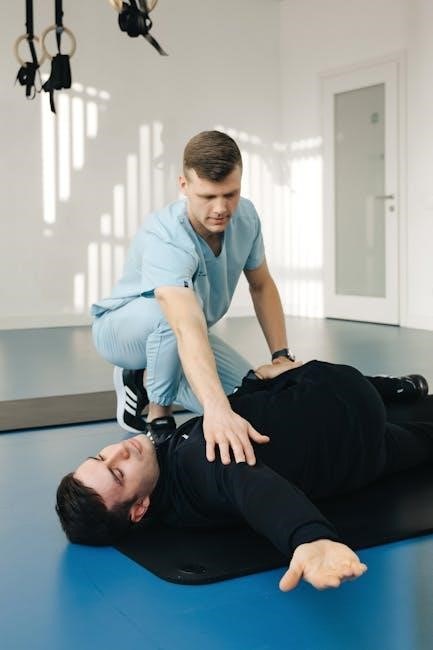
Examples include pressing your palm against a wall (shoulder flexion)‚ pushing your arm outwards against a doorframe (external rotation)‚ and attempting to squeeze your shoulder blades together without actual movement (scapular retraction). Hold each contraction for 5-10 seconds‚ repeating 10-15 times. Focus on maintaining good posture and avoiding any discomfort during these exercises.
Scapular Rows
Scapular rows are essential for strengthening the muscles that control scapular movement‚ crucial for AC joint stability and proper shoulder mechanics. Perform these seated or standing‚ using a resistance band looped around a stable object or a cable machine.
Focus on squeezing your shoulder blades together as you pull your elbows back‚ keeping your back straight and core engaged. Avoid shrugging your shoulders or using momentum. Control the movement throughout the entire range‚ slowly returning to the starting position. Begin with light resistance and gradually increase as strength improves‚ aiming for 3 sets of 10-15 repetitions.
Doorway Pec Stretch
The doorway pec stretch effectively addresses tightness in the pectoral muscles‚ which can contribute to poor shoulder posture and exacerbate AC joint discomfort. Stand in a doorway and place your forearms on the doorframe‚ elbows bent at 90 degrees.
Gently lean forward until you feel a stretch across your chest and the front of your shoulders. Maintain a relaxed posture and avoid overstretching. Hold the stretch for 20-30 seconds‚ repeating 2-3 times. This stretch helps improve shoulder mobility and allows for better scapular positioning‚ supporting AC joint rehabilitation. Breathe deeply throughout the exercise.
Intermediate Strengthening (6-12 Weeks)
This phase builds upon the initial range of motion work‚ focusing on gradually increasing strength and endurance around the AC joint. Exercises progress from assisted movements to more challenging‚ controlled activities.
Key exercises include external rotation with a dowel‚ promoting rotator cuff strength‚ and shoulder flexion with a dowel‚ enhancing forward elevation. These movements should be performed with proper form‚ focusing on scapular control. Monitor for any pain and adjust the intensity accordingly. The goal is to restore functional shoulder strength and prepare for advanced exercises‚ ensuring continued progress in rehabilitation.
External Rotation with Dowel
This exercise‚ typically initiated around the 6-12 week mark post-injury‚ aims to strengthen the external rotators of the shoulder‚ crucial for stability. Hold a dowel horizontally in front of you‚ elbows bent at 90 degrees and close to your body.
Slowly rotate your forearms outwards‚ keeping your elbows fixed. Focus on controlled movement and avoid shrugging your shoulders. Begin with a light resistance and gradually increase repetitions as tolerated. This exercise helps restore proper shoulder mechanics and prepares the joint for more demanding activities‚ contributing to a full recovery.
Shoulder Flexion with Dowel
Commencing around day 5‚ or within the 6-12 week timeframe‚ shoulder flexion with a dowel gently restores range of motion. Grasp a dowel with both hands‚ maintaining a shoulder-width grip. Keeping your elbows slightly bent‚ slowly raise the dowel overhead as far as comfortable.
Focus on smooth‚ controlled movement‚ avoiding any sharp pain. This exercise targets the anterior shoulder muscles and improves overall shoulder mobility. It’s vital to listen to your body and avoid pushing beyond your pain threshold‚ ensuring a safe and effective rehabilitation process.
Advanced Strengthening (12+ Weeks)
Beyond 12 weeks post-injury‚ the focus shifts to regaining full strength and function. This phase incorporates resistance band exercises‚ targeting specific shoulder and scapular muscles. Light weight training is also introduced‚ starting with low resistance and gradually increasing the load.
Exercises should emphasize proper form and controlled movements to prevent re-injury. Proprioceptive exercises‚ enhancing joint awareness‚ are crucial. Individual progression is key‚ guided by pain levels and functional improvements. This stage prepares the AC joint for a full return to activity‚ ensuring long-term stability and performance.
Resistance Band Exercises
Resistance bands provide versatile‚ low-impact resistance for advanced AC joint strengthening. External rotations with a band‚ anchored securely‚ improve rotator cuff function and stability. Shoulder abduction and flexion exercises‚ also band-assisted‚ target deltoid and supraspinatus muscles.
Focus on slow‚ controlled movements‚ maintaining proper scapular positioning throughout each exercise. Band tension should be adjusted to challenge the muscles without causing pain. These exercises enhance neuromuscular control and prepare the joint for more demanding activities‚ contributing to a successful return to sport or work.
Light Weight Training
Progressing to light weight training signifies substantial healing and strength gains. Begin with very low weights – typically 1-3 pounds – focusing on proper form and controlled movements. Shoulder presses‚ rows‚ and lateral raises are excellent choices‚ but prioritize exercises that don’t directly load the AC joint.
Gradually increase weight as tolerated‚ ensuring no pain is experienced during or after exercise. Maintaining scapular stability is paramount; incorporate scapular retraction exercises alongside weight training. This phase builds functional strength‚ preparing the shoulder for the demands of daily activities and eventual return to sport.
Rehabilitation Protocol Considerations
Individual progression varies based on age‚ health‚ compliance‚ and tissue quality. Proprioception and scapulohumeral rhythm exercises are vital for optimal recovery.
Individual Progression & Compliance
Successful AC joint rehabilitation hinges on recognizing that each patient’s journey is unique. Factors like age‚ pre-injury health status‚ the presence of other injuries‚ and crucially‚ adherence to the prescribed rehabilitation program significantly influence recovery timelines.
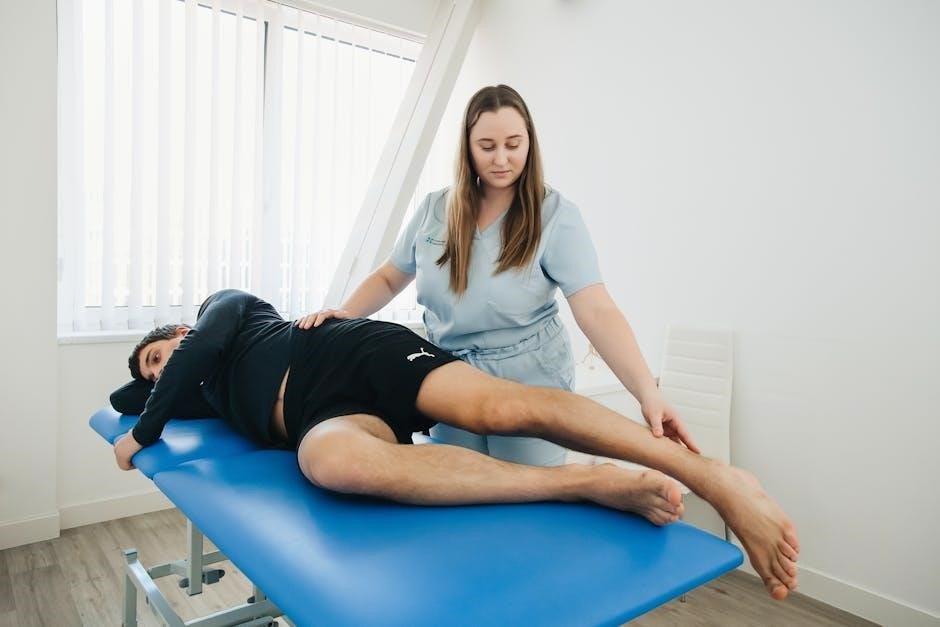
Tissue quality—how well the ligaments and surrounding structures heal—also plays a vital role. A standardized protocol serves as a guideline‚ but therapists must continually assess and adjust the program based on individual responses.
Consistent participation and diligent performance of exercises are paramount. Patients who actively engage in their rehab‚ following instructions carefully‚ generally experience better outcomes and a faster return to function.
Open communication between the patient and therapist is essential to address any concerns and ensure optimal compliance.

Proprioception & Scapulohumeral Rhythm
Restoring proper proprioception – the body’s awareness of its position in space – is a critical component of AC joint rehabilitation. Exercises focusing on rhythmic stabilization help retrain the neuromuscular control around the shoulder complex.
Scapulohumeral rhythm‚ the coordinated movement between the scapula and humerus‚ is often disrupted following an AC joint injury. Targeted exercises aim to re-establish this harmonious motion‚ ensuring efficient and pain-free shoulder function.
These exercises are typically incorporated as patients progress‚ building upon a foundation of pain management and range of motion.
Proprioceptive drills and scapulohumeral rhythm exercises are performed in functional positions‚ preparing the shoulder for the demands of daily activities and sport.

Returning to Activity
A gradual return to sport or work is essential‚ guided by pain levels and functional milestones. Preventative measures‚ including continued exercise‚ minimize re-injury risk.
Gradual Return to Sport/Work
Returning to activity after an AC joint injury demands a carefully phased approach. Initially‚ focus on work or sport modifications‚ avoiding activities that directly stress the joint. Progressively increase the intensity and duration of tasks‚ monitoring for any pain recurrence.
Early stages might involve light duties or modified training drills. As strength and range of motion improve‚ gradually reintroduce more demanding movements. Proprioceptive exercises and scapulohumeral rhythm training are vital during this phase‚ ensuring optimal shoulder mechanics.
Listen to your body; pain is a signal to reduce activity. A successful return requires patience‚ adherence to the rehabilitation program‚ and a realistic assessment of functional capabilities. Prioritize proper form and technique to minimize the risk of re-injury.
Preventative Measures
Preventing AC joint injuries involves strengthening the surrounding musculature‚ particularly the scapular stabilizers. A consistent exercise program focusing on scapular retractions‚ rows‚ and external rotations enhances shoulder stability and control.
Proper warm-up routines before physical activity are crucial‚ preparing the muscles and joints for stress. Incorporate dynamic stretching to improve range of motion and flexibility.
Address any muscle imbalances or biomechanical deficiencies that may predispose you to injury. Consider protective equipment‚ like shoulder padding‚ during high-impact sports. Maintaining good posture and body mechanics in daily activities also contributes to injury prevention. Prioritize proper technique during exercise and sport-specific movements.